
On this page
- Part 1: Workplace behaviour examples
- Behaviour is not the same as performance
- Part 2: What is a disciplinary infraction?
- The four levels of disciplinary infractions
- The usual fair process
- Part 3: Social judgement theory, and why the same message lands two ways
- A worked example: one announcement, two hearings
- Why this matters at work
- Frequently asked questions
- What are examples of good behavior at work?
- What is a disciplinary infraction?
- Is lateness a disciplinary infraction?
- What is the difference between poor behaviour and poor performance?
- What is social judgement theory in simple words?
Quick answer: Good workplace behaviour is the behaviour that helps a team get work done: clear updates, respect for others, turning up reliably, and owning mistakes. Poor behaviour does the opposite. When poor behaviour breaks a written rule, it stops being just “poor behaviour” and becomes a disciplinary infraction: an act the employer can formally act on. This guide gives examples of both, shows how infractions are graded from minor to gross misconduct, and ends with social judgement theory, the idea that explains why the same message lands well with one employee and badly with another.
People search for behavior examples for two main reasons. Managers need concrete examples when they write behaviour standards, reviews, or warnings. Employees search after a difficult conversation, to judge how serious their situation is. Both sides need the same thing: clear examples, in plain words, with the line between a bad habit and a formal offence marked out.
Part 1: Workplace behaviour examples
Workplace behaviour is how a person acts at work, both toward other people and toward the work itself. A research review of workplace relationships groups the positive side as collegiality, respect, cooperation, teamwork, social support, mentorship, and collaboration, and the negative side as aggression, bullying, incivility, and shutting people out (Positive and negative behaviours in workplace relationships, PMC).
For everyday use, four categories cover most of what managers praise or pull people up on: communication, teamwork, reliability, and attitude. The table below puts a good and a poor example of each behaviour side by side, with the effect each one has on the team.
| Behaviour | Good example | Poor example | Effect on the team |
|---|---|---|---|
| Communication: giving updates | Posts a short status update before a deadline slips, so others can adjust | Stays silent and lets the team discover the delay at the deadline | Work can be replanned early, instead of stalling at the last minute |
| Communication: listening and replies | Answers messages inside the agreed window and repeats back what they heard | Reads messages and never replies, or replies without reading | Fewer misunderstandings, instead of people chasing and doing work twice |
| Communication: disagreeing | Challenges the idea in the meeting, with reasons | Mocks the person, talks over them, and gossips about them later | Better decisions, instead of people going quiet to stay safe |
| Teamwork: helping out | Offers help when a teammate is overloaded, and asks early when overloaded themselves | Watches a teammate sink and says it is not their job | Work evens out across the team, instead of resentment building up |
| Teamwork: credit and blame | Names who did the work, and owns their own mistakes out loud | Takes the credit for joint work and blames others when it fails | Trust grows, instead of people hiding mistakes |
| Teamwork: sharing information | Writes decisions and key details where the whole team can find them | Keeps key details in private chats and in their head only | Anyone can pick the work up, instead of one person becoming a bottleneck |
| Reliability: punctuality | On time for shifts and meetings, and warns early when delayed | Regularly late, with no warning and no apology | Meetings start on time, instead of everyone waiting |
| Reliability: deadlines | Hits deadlines, or flags a risk days before the date | Misses deadlines and surprises the team on the day | Plans hold, instead of knock-on delays for everyone after them |
| Reliability: follow-through | Does what they agreed in the meeting and closes the loop | Agrees in the room and never does it | Managers can trust a yes, instead of double-checking everything |
| Reliability: attendance | Books leave in advance and hands work over before going | Repeated absences with no notice and no handover | Cover can be planned, instead of the team scrambling |
| Attitude: response to feedback | Listens, asks for a concrete example, and adjusts | Argues, sulks, or repeats the behaviour more loudly | Fast improvement, instead of feedback drying up |
| Attitude: handling change | Asks questions, tries the new way, and reports real problems with it | Quietly refuses, keeps the old way, and recruits others against it | Change lands once, instead of two systems running side by side |
| Attitude: mood and respect | Stays civil on a bad day and takes a short break instead of snapping | Sarcasm, eye-rolling, and the cold shoulder | A calm team climate, instead of people avoiding one colleague |
Two things are worth noting about the table. First, a single poor example is usually just a bad day. It is the pattern that matters: the same behaviour repeated, after it has been pointed out, is what moves a habit toward a formal problem. Second, the good examples are all cheap. None of them needs talent, budget, or permission. They are choices, which is exactly why employers treat the poor versions as conduct issues rather than skill gaps.
Behaviour is not the same as performance
Behaviour is about conduct: how a person acts. Performance is about results: what a person delivers. The two are handled differently. HR guidance draws the line this way: misconduct is deliberate behaviour, where the employee knows the action is inappropriate, while performance problems often come from a lack of training, skills, or motivation and are solved with coaching, not discipline (Canadian HR Reporter).
So a strong performer can still commit an infraction, for example by bullying a junior colleague. And an employee who misses targets but follows every rule has a performance problem, which calls for training and support, not a warning. Mixing the two up is one of the most common fairness mistakes managers make.
Part 2: What is a disciplinary infraction?
A disciplinary infraction is any employee behaviour that breaks workplace policies, the code of conduct, or established standards (Engagedly HR Glossary). The key word is “breaks”. An infraction needs a rule behind it: a clause in the contract, a policy in the handbook, or a standard the employee was clearly told about. Behaviour the employer merely dislikes, with no rule against it, is much harder to act on fairly.
Infractions range widely. At the small end sit repeated lateness, dress code slips, and personal phone use in meetings. At the far end sit theft, fraud, harassment, and violence. Most employers grade them, because the response has to fit the offence. One widely used way to judge severity looks at four things: the nature of the violation, how often it has happened, the intent behind it, and the impact it had on the organisation and its people (Zoho People HR Glossary).
The four levels of disciplinary infractions
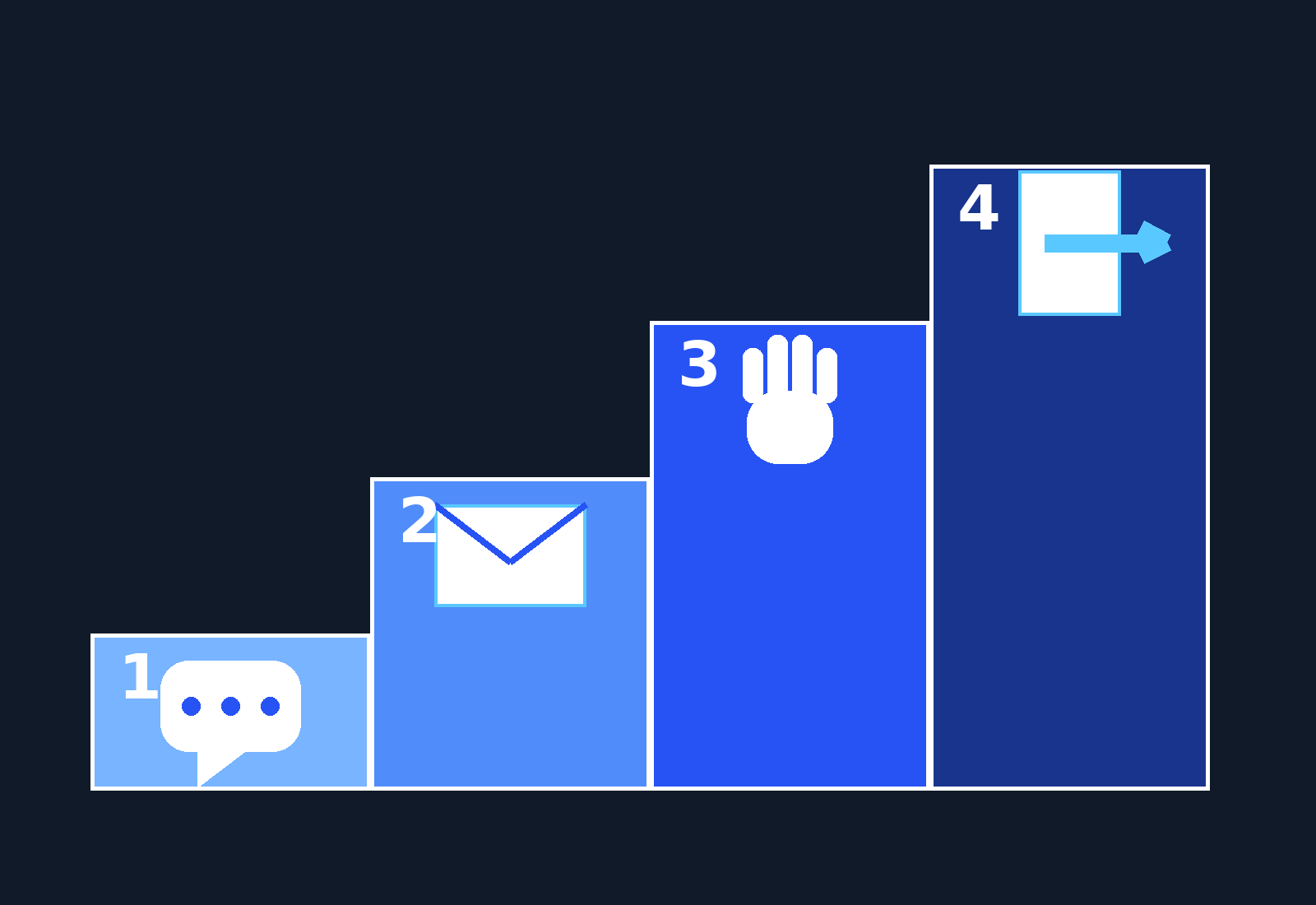
| Level | What it looks like | Example infractions | Typical response |
|---|---|---|---|
| 1. Minor | A rule is broken, but harm is low and it may be a first offence | Repeated lateness, dress code slips, phone use in meetings, a missed minor deadline | Informal conversation, then a verbal warning recorded on file |
| 2. Moderate | The behaviour continues after a warning, or causes real disruption | Unexplained absence, ignoring a safety step, a rude outburst at a colleague, repeated minor offences | Formal written warning, sometimes with a support or improvement plan |
| 3. Serious | Deliberate rule-breaking with clear harm to people, work, or trust | Refusing a lawful and reasonable instruction (insubordination), repeated breaches of procedure, bullying behaviour, misuse of company data | Final written warning, or suspension while the facts are checked |
| 4. Gross misconduct | Behaviour that destroys trust or puts people at risk | Theft, fraud, violence or threats, harassment or discrimination, working under the influence of alcohol or drugs | Dismissal is possible, after a fair investigation and hearing |
Repetition moves an issue up the ladder. One late arrival is a level 1 conversation. The same lateness every week, after a written warning, becomes a level 2 or 3 problem, because the employee has shown the warnings are not changing the behaviour. This is why managers are told to record even informal warnings: the record is what proves the pattern later.
The usual fair process
Most fair systems follow the same shape, often called progressive discipline. The steps rise in seriousness: verbal corrections, written warnings, final written warnings, and suspensions, with dismissal as the last step (SHRM). For gross misconduct, an employer may skip steps, but may not skip fairness. In general terms, a fair process looks like this:
- Start informally where you can. Minor issues are often settled by a quiet conversation before anything formal begins.
- Investigate the facts. Establish what actually happened before deciding anything. An investigation meeting is not itself a punishment.
- Put the allegation in writing. The employee should know exactly what they are accused of, see the evidence, and know the possible outcomes, with reasonable time to prepare. Deadlines in these letters are often counted in business days, so check which days count before you repeat a date.
- Hold a hearing. The employee gets to respond, question the evidence, present their own evidence, and, in many systems, bring a colleague or union representative.
- Decide, and confirm it in writing. The outcome, the improvement required, and how long any warning stays live should all be written down.
- Offer an appeal. The appeal should be heard promptly, ideally by someone who was not involved in the first decision (Acas).
This section describes general practice, not legal advice. Disciplinary rules vary a lot by country, by sector, and by what the employment contract says. If you are handling a real case, check your local rules or take proper HR or legal advice before you act.
Part 3: Social judgement theory, and why the same message lands two ways
The first two parts of this guide are about behaviour and rules. This last part is about perception, and it explains a puzzle every manager meets: you announce one change, in one meeting, in one set of words, and half the room nods while the other half hears a threat. Social judgement theory explains why.
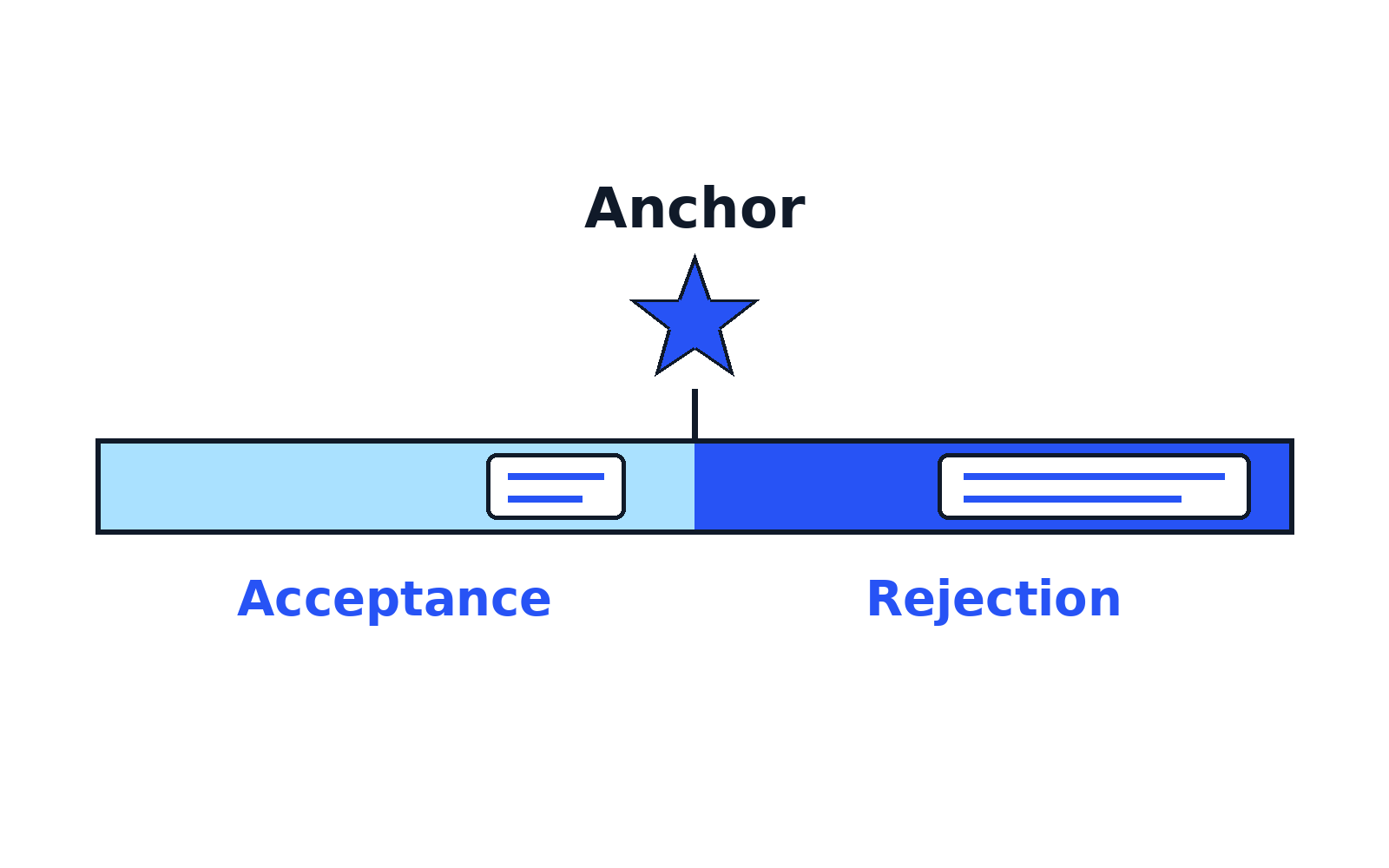
The theory was developed by Muzafer Sherif and Carl Hovland in the 1960s. Its core claim is simple: people do not judge a new message on its own. They judge it against the position they already hold. That existing position is called the anchor, and it works like the fixed point on a scale. Every new message gets placed somewhere relative to it (A First Look at Communication Theory).
Around the anchor sit three zones, called latitudes:
- Latitude of acceptance: the range of positions the person finds acceptable or reasonable. The anchor sits inside it.
- Latitude of noncommitment: the range the person neither accepts nor rejects. They have no strong view, yet.
- Latitude of rejection: the range the person finds unreasonable or objectionable.
How much the person cares about the issue is called ego-involvement. The more an issue touches someone’s identity, values, or daily life, the wider their latitude of rejection grows and the narrower their latitude of acceptance becomes. A casual observer can accept many positions. A person whose life is built around the issue accepts very few.
Two judgement errors follow from this, and they happen automatically:
- Assimilation: when a message falls inside the latitude of acceptance, the person hears it as closer to their own position than it really is.
- Contrast: when a message falls inside the latitude of rejection, the person hears it as further from their position than it really is, and pushes back harder than the message deserves (Encyclopedia.com, International Encyclopedia of the Social Sciences).
A worked example: one announcement, two hearings
The announcement. A manager tells her team: “From next month, everyone works from the office three days a week.”
Employee 1, Sara. Sara moved house to work fully remote. Her anchor is: fully remote is how this job works. One day a week in the office sits inside her latitude of acceptance. Two days sits in noncommitment. Three days falls inside her latitude of rejection, so the contrast effect fires. She hears the announcement as “they are dragging us back full time” and starts updating her CV that evening, even though three days is not five.
Employee 2, Tom. Tom’s anchor is: two office days a week is the right balance. Three days sits just inside the edge of his latitude of acceptance, so the assimilation effect fires. He hears the announcement as “basically what I wanted, close enough” and feels the company has listened.
What the manager does next. Arguing with Sara will not work, because Sara is not reacting to the real message; she is reacting to the contrasted version of it. The theory points to smaller steps. Announce two days first, which sits in Sara’s noncommitment zone and Tom’s acceptance zone. Let that become the new normal, so anchors shift. Then raise three days later, from a closer starting point.
Why this matters at work
- Feedback. A small, specific change request (“send the update before noon”) usually falls inside an employee’s latitude of acceptance. A sweeping one (“your whole approach is wrong”) lands in rejection and gets contrasted into an attack. Small steps, repeated, move people further than one big demand.
- Change announcements. Sequence the change so each step falls within reach of the current anchor. One giant jump triggers the contrast effect across the whole team at once.
- Negotiations. Find the other side’s anchor before you make an offer. An offer inside their noncommitment zone can be discussed. An offer inside their rejection zone does not just get refused; it gets heard as worse than it is, and it can harden their position.
The theory carries one honest warning. Persuasion works best when the gap between the message and the anchor is small to moderate. Push for a huge change in one step and attitude change becomes unlikely, because the message is either assimilated into “nothing new” or contrasted into “unacceptable”. Real change at work is usually a staircase, not a leap. For more plain-English guides to the language of work, start from the TechyHunt homepage.
Frequently asked questions
What are examples of good behavior at work?
The most valued examples are clear and early updates, listening properly and replying inside agreed times, helping teammates who are overloaded, owning mistakes out loud, hitting deadlines or flagging risks days ahead, and staying civil under pressure. The table in Part 1 lists 13 behaviours with a good example of each.
What is a disciplinary infraction?
A disciplinary infraction is any behaviour that breaks a workplace policy, the code of conduct, or an established standard. It ranges from minor issues such as repeated lateness to gross misconduct such as theft or harassment. The grading table in Part 2 shows the four levels and the typical response at each one.
Is lateness a disciplinary infraction?
It can be. One late arrival is normally handled with an informal conversation. Repeated lateness after warnings becomes a formal infraction, because the pattern breaks the attendance standard and shifts work onto colleagues. Repetition, intent, and impact are what move an issue up the ladder.
What is the difference between poor behaviour and poor performance?
Behaviour is conduct: how a person acts. Performance is results: what a person delivers. Deliberate rule-breaking is a conduct issue and belongs in the disciplinary process. Missed targets caused by weak skills or missing training are a performance issue and call for coaching and support instead.
What is social judgement theory in simple words?
It is the idea that people judge every new message against the view they already hold, called their anchor. Messages close to the anchor sound reasonable and get accepted. Messages far from it sound worse than they are and get rejected. Managers use it to explain why one announcement can please half a team and upset the other half.
Sources
- PMC: Positive and negative behaviours in workplace relationships (scoping review)
- Canadian HR Reporter: Following the progressive discipline process
- Engagedly HR Glossary: Disciplinary Infraction
- Zoho People HR Glossary: What is Disciplinary Infraction?
- SHRM: The Traditional Progressive Discipline Paradigm
- Acas: Disciplinary appeals and hearings guidance
- A First Look at Communication Theory: Social Judgment Theory resources
- Encyclopedia.com (International Encyclopedia of the Social Sciences): Social Judgment Theory

Jimmy
Jimmy is the editor behind TechyHunt. He covers business software, cybersecurity and practical tech how-tos, and leads testing for the site's free converter tools. His focus is clear, jargon-free guides that help readers make smarter tech decisions, faster.
Every article follows our Editorial Standards. Spotted an error? Tell us.