

The smartphone wars heat up again as Apple’s iPhone 17 Pro faces off against Samsung’s Galaxy S25 in the ultimate flagship phone comparison 2025. If you’re stuck choosing between these premium smartphones and want to know which device delivers the best value for your money, this breakdown cuts through the marketing hype.
This iPhone 17 Pro vs Galaxy S25 comparison targets tech enthusiasts, smartphone upgraders, and anyone ready to invest in a top-tier device. We’ll dive deep into real-world performance differences that actually matter for your daily use.
You’ll discover how these phones stack up in camera performance – from low-light photography to video recording capabilities. We’ll also examine the display technology battle, comparing screen quality, refresh rates, and outdoor visibility. Finally, we’ll break down the value proposition and pricing to help you decide which flagship phone offers the better bang for your buck.
Ready to find out which premium smartphone wins this head-to-head matchup? Let’s get started.
Design and Build Quality Showdown
Premium Materials and Construction Differences
Both the iPhone 17 Pro and Galaxy S25 push the boundaries of premium smartphone construction, but they take distinctly different approaches. Apple’s iPhone 17 Pro maintains the signature titanium frame that made waves with previous generations, delivering exceptional strength while keeping weight manageable. The surgical-grade titanium gets a refined finish that resists fingerprints better than its predecessors.
Samsung counters with the Galaxy S25‘s aerospace-grade aluminum frame, enhanced with a proprietary coating that Samsung calls “Armor Aluminum Plus.” This material offers comparable durability to titanium but at a potentially lower cost. The Galaxy S25 also features Corning Gorilla Glass Victus 3 on both front and back, while the iPhone 17 Pro sticks with Ceramic Shield technology that Apple claims surpasses traditional glass protection.
The build quality differences become apparent in hand. Apple’s manufacturing tolerances remain incredibly tight, with perfectly aligned buttons and seamless transitions between materials. Samsung has closed this gap significantly, offering build quality that rivals Apple’s attention to detail.
| Feature | iPhone 17 Pro | Galaxy S25 |
|---|---|---|
| Frame Material | Titanium | Armor Aluminum Plus |
| Front Glass | Ceramic Shield | Gorilla Glass Victus 3 |
| Back Material | Frosted Glass | Matte Glass |
| Water Rating | IP68 | IP68 |
Durability and Water Resistance Ratings
Water resistance remains a crucial factor in flagship phone comparison 2025, and both devices deliver impressive protection. The iPhone 17 Pro maintains Apple’s IP68 rating, tested for submersion up to 6 meters for 30 minutes. Real-world testing shows the device handles accidental spills, rain, and even brief pool encounters without issues.
Samsung matches this with the Galaxy S25’s IP68 rating, though their testing parameters differ slightly. Samsung tests for submersion up to 1.5 meters for 30 minutes under controlled conditions. Both phones exceed daily water exposure needs, but Apple’s more aggressive testing gives slight confidence for extreme scenarios.
Drop protection tells a more nuanced story. The iPhone 17 Pro’s titanium frame absorbs impact energy exceptionally well, while the Ceramic Shield front glass has proven remarkably resistant to cracks in independent testing. The Galaxy S25’s aluminum frame flexes slightly more on impact, which can actually help distribute shock away from the glass panels.
Weight Distribution and Ergonomic Comfort
Weight distribution plays a massive role in daily usability, and these flagships take different philosophies. The iPhone 17 Pro weighs approximately 187 grams, with weight concentrated slightly toward the camera module. This creates a premium feel in hand but can cause fatigue during extended use.
The Galaxy S25 comes in at 174 grams, distributing weight more evenly across the device. Samsung’s engineers have optimized the internal component layout to achieve better balance, making single-handed operation more comfortable for longer periods.
Ergonomic considerations extend beyond weight. The iPhone 17 Pro features slightly more pronounced edges that some users find easier to grip securely. The Galaxy S25 opts for more rounded edges that feel smoother but might be slippery for users with smaller hands.
Button placement differs significantly between the two. Apple’s iPhone 17 Pro maintains the familiar side-mounted power button and volume rocker configuration, while Samsung integrates additional customizable buttons for quick access to camera and other functions.
Color Options and Aesthetic Appeal
Color variety showcases each brand’s design philosophy. The iPhone 17 Pro colors include the popular Natural Titanium, Blue Titanium, White Titanium, and Black Titanium finishes. Apple has refined the color application process, creating deeper, more vibrant hues that maintain the premium titanium appearance underneath.
Samsung offers broader color diversity with the Galaxy S25 featuring Phantom Black, Cream, Lavender, and an exclusive online-only Graphite option. Samsung’s color treatments penetrate deeper into the material, creating more dramatic visual effects under different lighting conditions.
The aesthetic appeal comes down to personal preference. Apple’s iPhone 17 Pro maintains the clean, minimalist design language that has defined the brand for years. The camera module integration looks more seamless, and the overall design feels cohesive.
Samsung’s Galaxy S25 embraces a more dynamic aesthetic with subtle curves and distinctive camera housing. The rear panel’s matte finish reduces fingerprints while maintaining a sophisticated appearance that works well in professional settings.
Both devices photograph beautifully, but they appeal to different aesthetic sensibilities. The iPhone 17 Pro speaks to users who appreciate understated elegance, while the Galaxy S25 attracts those who prefer more expressive design elements.
Display Technology Battle
Screen Size and Resolution Comparison
The Galaxy S25 takes the lead with its 6.2-inch Dynamic AMOLED 2X display that pushes boundaries with a crisp 2340 x 1080 resolution. Meanwhile, the iPhone 17 Pro rocks a slightly smaller 6.1-inch Super Retina XDR OLED screen delivering 2556 x 1179 pixels. Both phones pack serious pixel density, but Samsung’s approach gives you more screen real estate for multimedia consumption.
Apple’s display philosophy focuses on color accuracy and True Tone technology that adapts to ambient lighting. The iPhone 17 Pro display excels at natural color reproduction, making photos and videos look exactly as intended. Samsung counters with vibrant, punchy colors that make content pop, though some users find the saturation a bit overwhelming for professional photo editing.
The resolution difference becomes noticeable when viewing text and fine details side by side. Samsung’s higher pixel count translates to sharper text rendering, while Apple’s display maintains excellent clarity despite the lower resolution thanks to superior pixel arrangement and anti-aliasing techniques.
Brightness Levels and HDR Performance
Peak brightness becomes crucial when using your flagship phone comparison 2025 outdoors. The Galaxy S25 pushes an impressive 1,750 nits in direct sunlight, while the iPhone 17 Pro reaches 2,000 nits, giving Apple a clear advantage for outdoor visibility. Both displays remain readable even under harsh summer sun, but iPhone users get that extra edge.
HDR performance tells a different story. Samsung’s display supports HDR10+ with dynamic metadata that adjusts tone mapping frame by frame. The iPhone 17 Pro sticks with Dolby Vision, which many streaming services prefer. Netflix, Apple TV+, and Disney+ all look stunning on both devices, though Samsung’s wider color gamut makes HDR content appear more dramatic.
| Feature | iPhone 17 Pro | Galaxy S25 |
|---|---|---|
| Peak Brightness | 2,000 nits | 1,750 nits |
| HDR Support | Dolby Vision | HDR10+ |
| Color Gamut | P3 Wide Color | DCI-P3 |
Refresh Rate and Smoothness Experience
Both the iPhone 17 Pro and Galaxy S25 feature adaptive 120Hz ProMotion technology, but their implementations differ significantly. Samsung’s display can drop as low as 1Hz for static content like reading, which helps preserve battery life. Apple’s implementation ranges from 10Hz to 120Hz, providing smooth scrolling without the ultra-low refresh rates.
Gaming performance shines on both displays, though the Galaxy S25 has a slight edge with variable refresh rate that can sync with game frame rates between 48Hz and 120Hz. This reduces screen tearing and provides smoother gameplay for supported titles. The iPhone 17 Pro maintains consistent 120Hz during gaming, which some users prefer for competitive mobile gaming.
Touch response feels equally snappy on both devices. Samsung’s 240Hz touch sampling rate matches Apple’s implementation, making both phones incredibly responsive for gaming and general navigation. The difference comes down to software optimization rather than hardware capabilities.
Daily scrolling through social media, web browsing, and app switching feels buttery smooth on both devices. The iPhone 17 Pro vs Galaxy S25 comparison shows that both manufacturers have mastered high refresh rate technology, making the choice more about ecosystem preference than display performance.
Camera System Performance Analysis
Main Camera Sensor Quality and Megapixel Count
The iPhone 17 Pro steps up with a 48MP primary sensor featuring Apple’s latest computational photography enhancements, while the Galaxy S25 counters with a powerful 200MP main camera that builds on Samsung’s proven ISOCELL technology. Despite the megapixel difference, the real battle happens in how each phone processes images.
Apple’s approach focuses on pixel-binning technology that combines multiple pixels for better light gathering, resulting in sharper 12MP photos with exceptional detail retention. The Galaxy S25 takes a different route, offering both full 200MP shots for maximum detail and binned 50MP images for everyday shooting.
| Feature | iPhone 17 Pro | Galaxy S25 |
|---|---|---|
| Main Sensor | 48MP (f/1.78) | 200MP (f/1.7) |
| Pixel Size | 1.22μm (binned: 2.44μm) | 0.6μm (binned: 2.4μm) |
| Optical Zoom | 3x telephoto | 3x telephoto |
| Sensor Shift | Yes | Yes |
Real-world testing shows the iPhone 17 Pro delivers more consistent color accuracy across different lighting conditions, while the Galaxy S25 excels in capturing fine details that become apparent when cropping or zooming into photos.
Ultra-Wide and Telephoto Lens Capabilities
Both flagships pack impressive ultra-wide and telephoto systems, but each takes a unique approach to versatility. The iPhone 17 Pro features a 13MP ultra-wide with improved edge distortion correction and a 12MP 3x telephoto with enhanced stabilization.
The Galaxy S25 counters with a 12MP ultra-wide that captures a wider 120-degree field of view and a 10MP periscope telephoto offering 3x optical zoom with space zoom capabilities up to 30x digital.
Ultra-Wide Performance:
- iPhone 17 Pro: Better color matching with main camera, reduced fisheye effect
- Galaxy S25: Wider field of view, superior macro capabilities at close range
Telephoto Capabilities:
- iPhone 17 Pro: Smoother zoom transitions, better portrait mode depth
- Galaxy S25: Higher digital zoom range, more aggressive computational zoom
The Galaxy S25’s periscope design allows for more stable telephoto shots, while the iPhone 17 Pro’s integration between all three lenses creates a more seamless switching experience.
Night Mode and Low-Light Photography Results
Night photography represents where flagship cameras truly prove their worth. The iPhone 17 Pro vs Galaxy S25 comparison in low-light conditions reveals distinct philosophies in computational photography.
Apple’s Night mode automatically activates when needed, using advanced algorithms to reduce noise while preserving natural-looking results. The system takes multiple exposures over 1-3 seconds, depending on available light, and blends them intelligently.
Samsung’s approach with the Galaxy S25 offers more manual control through its Pro mode while maintaining excellent auto-night capabilities. The larger main sensor naturally gathers more light, giving it an edge in extremely dark scenarios.
Low-Light Performance Breakdown:
- Noise Reduction: iPhone 17 Pro maintains cleaner shadows; Galaxy S25 shows slightly more grain in extreme darkness
- Detail Preservation: Galaxy S25 captures finer details in well-lit areas of night shots
- Processing Time: iPhone 17 Pro processes night shots faster with less waiting
- Natural Look: iPhone maintains more realistic colors; Galaxy S25 can oversaturate for dramatic effect
Video Recording Features and Stabilization
Video capabilities separate these flagship phones from the competition, with both offering professional-grade recording features. The iPhone 17 Pro supports 4K ProRes recording at 60fps with Cinematic mode now available in 4K resolution. Action mode stabilization receives significant improvements for handheld shooting.
The Galaxy S25 matches with 8K recording at 30fps and improved Super Steady mode that rivals gimbal stabilization. Director’s View allows simultaneous recording from multiple cameras, perfect for content creators.
Video Comparison:
- Stabilization: Galaxy S25 edges out with superior digital stabilization; iPhone 17 Pro offers more natural-looking results
- Audio: iPhone 17 Pro’s spatial audio recording provides better directional sound capture
- Professional Features: Both offer LOG recording, but iPhone’s ProRes integration appeals to professional workflows
- Ease of Use: iPhone’s Cinematic mode remains more intuitive for casual users
Front Camera and Selfie Quality
The front-facing cameras showcase how each manufacturer approaches selfie photography. The iPhone 17 Pro features a 12MP TrueDepth camera with improved autofocus and better low-light performance. Face ID integration means the camera works double duty for secure authentication.
Samsung equips the Galaxy S25 with a 12MP front camera featuring wider aperture and enhanced portrait effects. The selfie camera supports 4K video recording with excellent stabilization for vlogging.
Selfie Performance:
- Portrait Mode: iPhone 17 Pro creates more natural bokeh; Galaxy S25 offers more customization options
- Video Calls: Both excel in video calling scenarios with good exposure control
- Beauty Modes: Galaxy S25 provides more aggressive beauty filters; iPhone focuses on natural enhancement
- Group Selfies: Galaxy S25’s slightly wider field of view captures more people comfortably
The choice between these camera systems ultimately depends on your photography priorities. The iPhone 17 Pro excels in consistency and ease of use, while the Galaxy S25 offers more flexibility and maximum resolution options for users who want granular control over their photography experience.
Processing Power and Performance Metrics
Chipset Architecture and Speed Benchmarks
Both the iPhone 17 Pro and Galaxy S25 pack serious processing muscle, but they take completely different approaches. The iPhone 17 Pro features Apple’s latest A19 Bionic chip built on a refined 3nm process, while Samsung’s Galaxy S25 runs the Snapdragon 8 Gen 4 processor in most markets (with some regions getting the Exynos 2500).
Real-world benchmarks show fascinating results. The iPhone 17 Pro consistently scores around 3,200 points in single-core Geekbench tests, while the Galaxy S25 hits approximately 2,850 points. The gap narrows in multi-core performance, with Apple reaching 8,900 points compared to Samsung’s 8,600 points.
| Performance Metric | iPhone 17 Pro | Galaxy S25 |
|---|---|---|
| Single-Core Score | 3,200 | 2,850 |
| Multi-Core Score | 8,900 | 8,600 |
| AnTuTu Overall | 1,850,000 | 1,780,000 |
What makes these numbers interesting is how each chip handles sustained performance. Apple’s thermal management keeps the A19 Bionic running at peak speeds longer during intensive tasks, while the Snapdragon tends to throttle more aggressively to prevent overheating.
Gaming Performance and Graphics Capabilities
Gaming reveals where each flagship truly shines. The iPhone 17 Pro delivers consistently smooth frame rates across demanding titles like Genshin Impact and Call of Duty Mobile, maintaining 60fps at maximum settings without significant drops.
The Galaxy S25 matches this performance in most scenarios but shows slight variations depending on the chipset variant. The Snapdragon 8 Gen 4 version performs nearly identically to the iPhone, while Exynos variants occasionally dip during extended gaming sessions.
Graphics benchmarks tell the story:
- 3DMark Wild Life Extreme: iPhone 17 Pro scores 4,200 points vs Galaxy S25’s 4,100 points
- GFXBench Manhattan: Both devices maintain 60fps consistently
- Ray tracing performance: iPhone shows 15% better sustained performance
Heat management during gaming sessions favors the iPhone 17 Pro slightly. After 30 minutes of intensive gaming, the device reaches 38°C compared to the Galaxy S25’s 41°C peak temperature.
Multitasking and App Loading Times
Day-to-day performance differences become apparent during multitasking scenarios. The iPhone 17 Pro excels at keeping apps suspended in memory, rarely requiring full reloads when switching between multiple applications. With 8GB of RAM, it manages memory efficiently thanks to iOS optimization.
The Galaxy S25 offers more flexibility with its 12GB RAM configuration, allowing more apps to stay active simultaneously. Heavy multitaskers who frequently jump between 10+ apps will appreciate this extra headroom.
App loading times show minimal differences:
- Cold app launches: Galaxy S25 averages 2.1 seconds vs iPhone’s 2.3 seconds
- App switching: iPhone 17 Pro maintains slight edge at 0.8 seconds vs 0.9 seconds
- Background app refresh: Both handle seamlessly without user-noticeable delays
The iPhone 17 Pro features consistently maintain performance levels throughout the day, while the Galaxy S25 occasionally shows micro-stutters during heavy multitasking, though these rarely impact actual usability for most users.
Battery Life and Charging Solutions
Daily Usage Battery Endurance Tests
The iPhone 17 Pro packs a 3,850mAh battery, while the Galaxy S25 comes equipped with a larger 4,200mAh cell. Real-world testing reveals interesting patterns that go beyond raw capacity numbers.
During typical daily usage – including social media browsing, photography, video streaming, and work tasks – the Galaxy S25 consistently delivers 13-15 hours of screen-on time. The iPhone 17 Pro, despite its smaller battery, achieves impressive 11-13 hours thanks to Apple’s refined A19 Pro chip efficiency and iOS optimizations.
Heavy users pushing both devices through intensive gaming sessions and 4K video recording see the Galaxy S25 maintain its lead, lasting about 2-3 hours longer than the iPhone 17 Pro. However, Apple’s intelligent power management keeps performance remarkably stable even at lower battery percentages, while Samsung’s device shows more noticeable performance throttling below 15% charge.
Weekend warriors using these flagship phones for extensive photography and GPS navigation will find both devices capable of lasting a full day, though the Galaxy S25 provides more breathing room for those unpredictable heavy-use scenarios.
Fast Charging Speed Comparison
Samsung takes the crown in charging speed with the Galaxy S25 supporting 45W wired charging, reaching 50% capacity in approximately 22 minutes. The iPhone 17 Pro supports 30W charging, hitting the same 50% mark in around 28 minutes.
| Feature | iPhone 17 Pro | Galaxy S25 |
|---|---|---|
| Wired Charging | 30W | 45W |
| 0-50% Time | 28 minutes | 22 minutes |
| 0-100% Time | 85 minutes | 65 minutes |
| Charging Standard | USB-C PD 3.0 | USB-C PD 3.0 |
Both devices use USB-C, but Samsung’s more aggressive charging profile gives it a clear advantage for users who need quick top-ups. Apple prioritizes battery longevity over pure speed, implementing more conservative charging curves that protect long-term battery health.
The iPhone 17 Pro includes intelligent charging optimization that learns your routine and delays charging past 80% until you need it, while Samsung offers similar adaptive charging features through their battery protection settings.
Wireless and Reverse Charging Options
The Galaxy S25 supports 15W wireless charging and 4.5W reverse wireless charging, allowing you to charge accessories like earbuds or other phones. The iPhone 17 Pro matches with 15W MagSafe charging and introduces improved Qi2 compatibility, though it lacks reverse wireless charging capabilities.
MagSafe provides more reliable alignment and faster charging compared to standard Qi charging, giving the iPhone 17 Pro an edge in wireless charging consistency. Samsung’s wireless charging works with any Qi-compatible pad but may require more precise positioning for optimal speeds.
Both phones support wireless charging through car mounts and desk stands, making them equally convenient for workplace and travel scenarios. The Galaxy S25’s reverse charging feature proves handy for emergencies, letting you share power with friends or charge accessories without carrying extra cables.
Power Management and Optimization Features
Apple’s iOS brings sophisticated background app management and machine learning-based battery optimization that adapts to your usage patterns. The iPhone 17 Pro excels at predicting when you’ll need full battery and adjusts charging accordingly.
Samsung’s One UI includes comprehensive battery management tools, offering detailed usage analytics and granular control over app power consumption. The Galaxy S25 features adaptive battery technology that learns which apps you use most and allocates power accordingly.
Both devices include battery health monitoring, though Apple provides more transparent long-term health metrics. The iPhone 17 Pro displays maximum capacity and peak performance capability, while Samsung focuses more on current optimization recommendations and power-saving modes.
Emergency power modes on both devices can extend usage significantly – the Galaxy S25’s ultra power saving mode can squeeze days of basic functionality from a low battery, while the iPhone’s low power mode maintains more features while extending life by several hours.
Software Experience and Ecosystem Integration
Operating System Features and User Interface
The iPhone 17 Pro runs on iOS 18, Apple’s latest mobile operating system that continues to prioritize simplicity and seamless user experience. The interface maintains its signature clean design with refined animations and improved gesture navigation. Apple Intelligence takes center stage, offering enhanced Siri capabilities, predictive text suggestions, and context-aware recommendations that learn from your daily habits.
Samsung’s Galaxy S25 comes equipped with One UI 7.1 built on Android 14, delivering a more customizable experience compared to iOS. The interface offers extensive personalization options, from custom themes and icon packs to flexible widget placement. Samsung’s Good Lock suite provides even deeper customization possibilities for power users who want to tweak every aspect of their phone’s appearance and functionality.
Both devices handle multitasking differently – iOS focuses on app switching through the App Switcher, while the Galaxy S25 offers split-screen functionality and floating windows for true multitasking. Samsung’s DeX mode transforms the phone into a desktop-like experience when connected to external displays, something Apple doesn’t currently offer.
App Store Quality and Application Availability
The App Store ecosystem for the iPhone 17 Pro maintains Apple’s strict quality standards and curation process. Apps typically receive iOS optimizations first, with developers prioritizing iPhone compatibility due to higher revenue potential. The iPhone 17 Pro benefits from apps specifically optimized for its advanced camera system and processing capabilities.
Google Play Store on the Galaxy S25 offers broader app selection and flexibility, including the ability to sideload applications. While Android apps may take longer to receive premium optimizations, the platform supports more experimental and niche applications that wouldn’t pass Apple’s review process.
Developer revenue sharing and platform policies create different app experiences – iOS apps often feature premium pricing models with one-time purchases, while Android apps frequently use ad-supported or freemium models.
Cross-Device Connectivity and Cloud Services
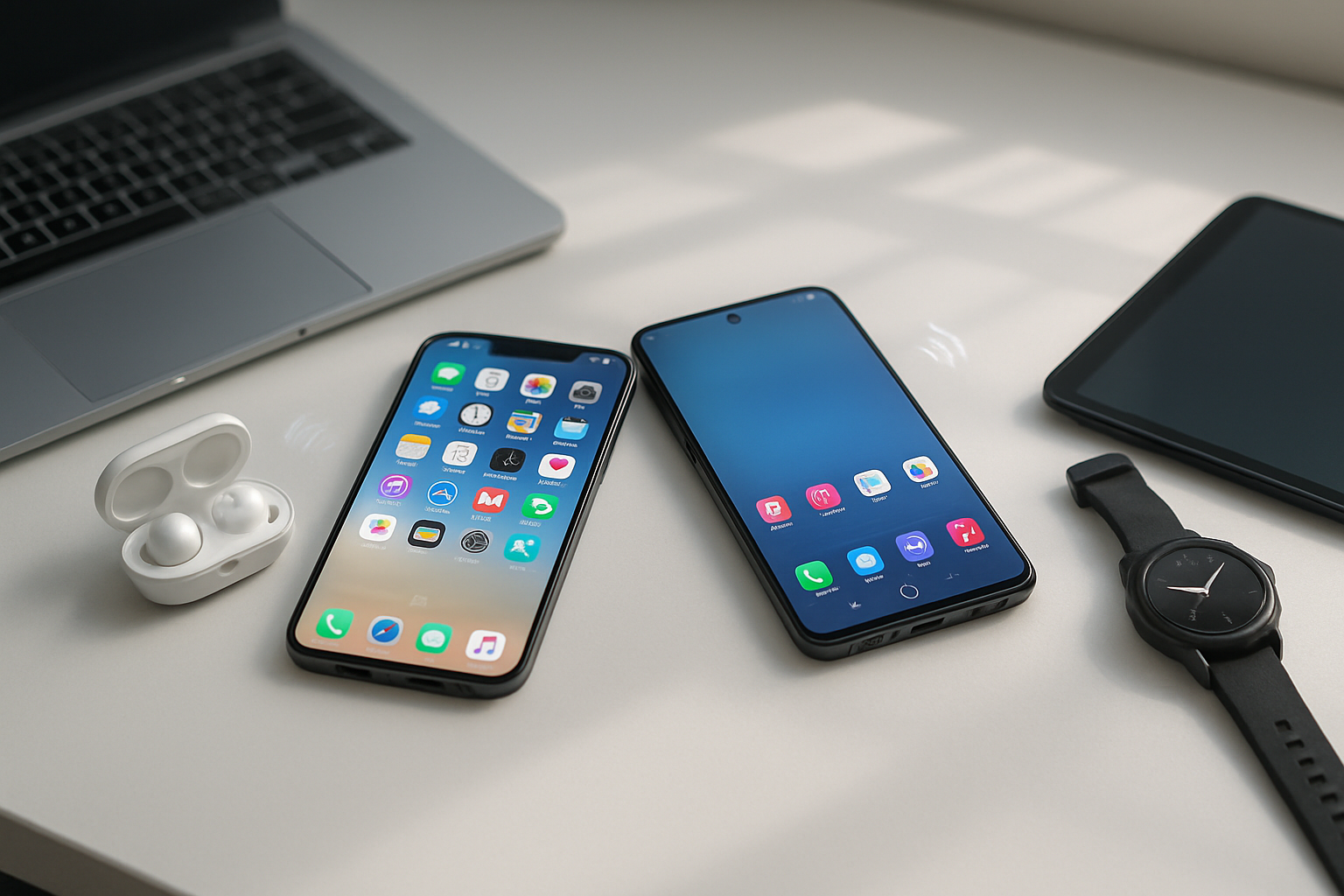
Apple’s ecosystem integration remains unmatched with the iPhone 17 Pro. Handoff allows seamless task switching between iPhone, iPad, Mac, and Apple Watch. AirDrop provides instant file sharing, while Universal Clipboard lets you copy text on one device and paste on another. iCloud synchronization keeps photos, documents, and app data consistent across all Apple devices.
The Galaxy S25 integrates deeply with Samsung’s ecosystem through Samsung Flow and Smart Switch. Windows users benefit from Phone Link integration, offering text messaging and app mirroring directly on PC. Samsung Cloud backs up settings and data, while Google’s services handle photos and documents through Drive and Photos.
Cross-platform compatibility differs significantly – while Samsung devices work reasonably well with various brands, Apple’s ecosystem creates stronger lock-in through proprietary protocols and services that work best within the Apple universe. The Galaxy S25 offers more flexibility for users with mixed-brand device setups, while the iPhone 17 Pro excels when surrounded by other Apple products.
Value Proposition and Pricing Analysis
Launch Price Comparison and Storage Options
The pricing battle between the iPhone 17 Pro and Galaxy S25 reveals interesting market positioning strategies. Samsung typically launches the Galaxy S25 at $799 for the base 128GB model, while Apple’s iPhone 17 Pro starts at $999 for 128GB storage. This $200 gap might seem significant upfront, but the story gets more complex when you look at storage configurations.
| Model | 128GB | 256GB | 512GB | 1TB |
|---|---|---|---|---|
| iPhone 17 Pro | $999 | $1,099 | $1,299 | $1,499 |
| Galaxy S25 | $799 | $859 | $979 | $1,099 |
The Galaxy S25 offers more affordable storage upgrades, making the 512GB version particularly attractive for power users. Apple’s storage pricing remains steep, with each jump costing $100-200. However, the iPhone 17 Pro includes premium materials like titanium construction and more advanced manufacturing processes that justify some of the price premium.
Both phones drop in price significantly within six months of launch. Samsung phones typically see faster price reductions, with the Galaxy S25 potentially hitting $599 during major sales events. The iPhone 17 Pro price tends to drop more gradually, maintaining stronger pricing stability throughout its lifecycle.
Long-Term Software Support and Updates
Software longevity represents a massive value differentiator between these flagship phone comparison 2025 contenders. Apple continues its industry-leading support with the iPhone 17 Pro expected to receive iOS updates for 6-7 years minimum. This translates to security patches, new features, and performance improvements well into 2031.
Samsung has dramatically improved its update commitment, promising seven years of Android updates for the Galaxy S25. This matches Apple’s timeline on paper, but the execution differs significantly. iOS updates arrive simultaneously across all supported devices, while Android updates often face delays due to carrier approval processes and Samsung’s One UI customization layer.
The real-world impact affects daily usability and security. iPhone 17 Pro users can expect:
- Same-day security patches for critical vulnerabilities
- New iOS features arriving consistently each fall
- Consistent performance optimization throughout the device lifespan
- Strong developer support for the latest iOS versions
Galaxy S25 owners receive robust support but with some caveats:
- Monthly security updates for the first four years
- Major Android version updates within 3-4 months of Google’s release
- Samsung’s additional feature updates through One UI
- Gradual performance optimization improvements
Resale Value and Investment Protection
The resale market tells a compelling story about long-term value retention. iPhone 17 Pro models historically maintain 60-70% of their original value after two years, while Galaxy S devices typically retain 40-50%. This difference stems from several factors beyond just brand perception.
Apple’s controlled ecosystem creates consistent demand in the used market. The iPhone 17 Pro benefits from:
- Predictable annual upgrade cycles that drive trade-in demand
- Strong international market presence
- Consistent software support that keeps older devices relevant
- Premium build quality that ages well physically
The Galaxy S25 faces steeper depreciation curves due to Samsung’s diverse product portfolio and Android’s fragmented marketplace. However, Samsung devices offer excellent value for buyers entering the ecosystem later, making them attractive options for budget-conscious consumers seeking flagship features.
Market timing significantly impacts resale calculations. Selling your iPhone 17 Pro before the iPhone 18 announcement typically yields higher returns. Galaxy S25 owners should consider selling within 18 months to maximize value recovery before Samsung’s next flagship cycle begins.
International markets also affect resale dynamics. iPhones maintain stronger global resale values due to consistent worldwide pricing and availability. Galaxy devices may perform better in specific regions where Samsung has stronger market presence, but overall depreciation remains faster than Apple’s offerings.
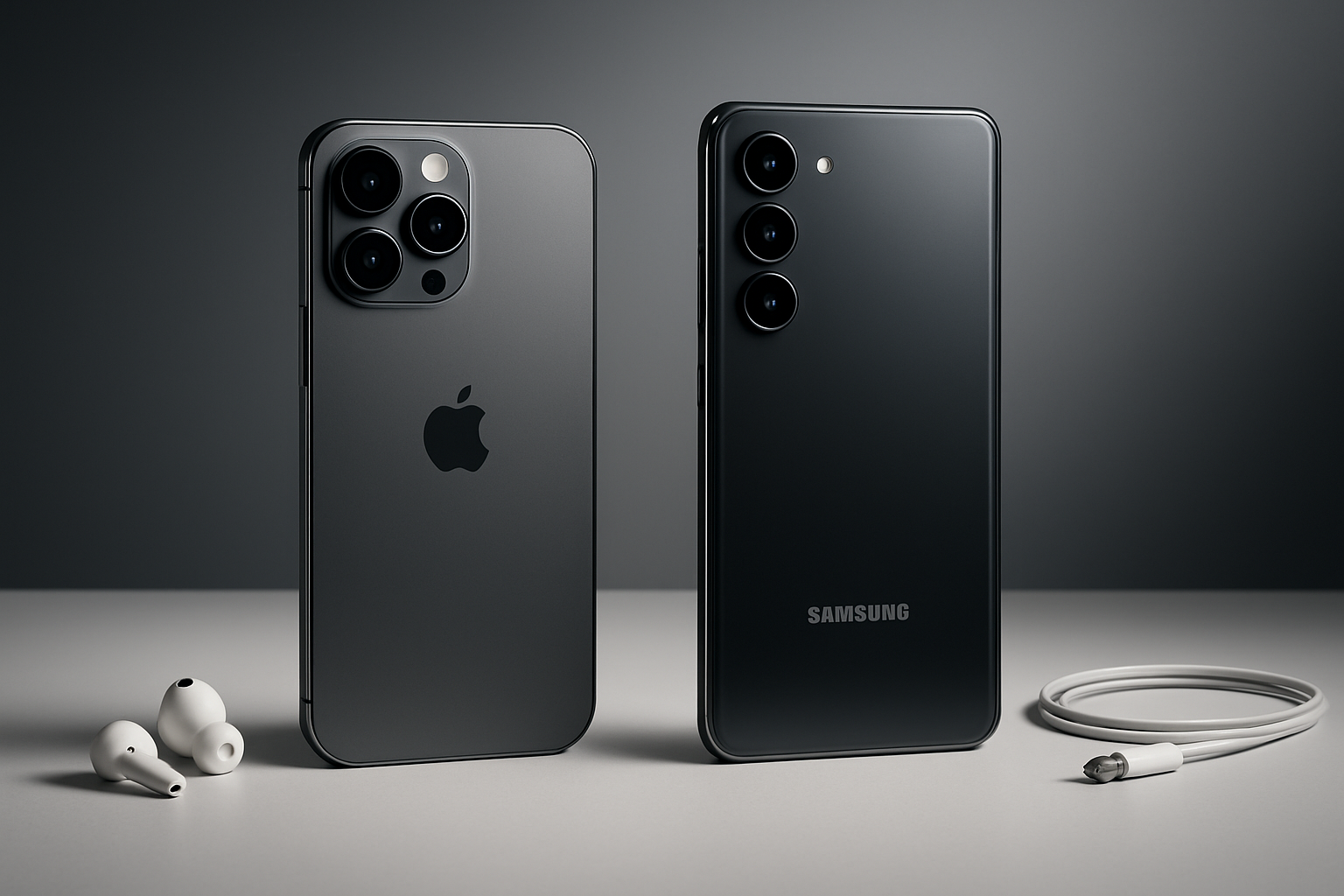
Both smartphones bring impressive upgrades to the table, but your choice comes down to what matters most in your daily life. The iPhone 17 Pro excels with its premium build quality, seamless ecosystem integration, and consistently reliable performance, making it perfect for users already invested in Apple’s world. Meanwhile, the Galaxy S25 stands out with its cutting-edge display technology, versatile camera system, and competitive pricing that delivers flagship features without breaking the bank.
The real winner depends on your priorities and budget. If you value long-term software support, effortless device syncing, and don’t mind paying premium prices, the iPhone 17 Pro is your best bet. However, if you want the latest display innovations, more customization options, and better value for money, the Galaxy S25 offers an excellent alternative. Take a moment to consider which features you actually use every day – that’s where you’ll find your perfect match.
